

Locke Solid Wood Single Coffee Table
- This 34” coffee table blends classic style with a farmhouse-inspired aesthetic. With a round engineered wood top and turned solid wood legs, it showcases a rustic design that complements a variety of décor styles in your living room or den. It also features a lower shelf for added storage, just right for displaying your favorite books or storing your magazines. We love that its compact size makes it a versatile addition to your space, while the natural wood grain finish adds a touch of warmth. Pair it with a cozy armchair and a soft throw for a welcoming, homey feel.
- Features
- Elegant and perfectly rounded silhouette
- Spray painted
- Please note that due to the difference in light conditions, some table colors may vary slightly. We try to represent all product colors as accurately as possible
$151.99

Ansel Coffee Table
- With its modern and luxury design. The gear and fluted side make it both elegant and industrial. All the coffee table enhance the design. It could use it as a coffee table in your living room or office.
- Features
- This vintage round coffee table is made of high quality MDF, which is durable in use. Combined with meticulous craftsmanship, providing a solid foundation for the coffee table and making your experience of using a coffee table even better.
- The gear shaped designs around the wood coffee table are all Handcrafted, fashionable, simple and durable. This modern coffee table is suitable for living room, apartment,office and shopping mall.
- With a maximum capacity of 300/350 pounds, it’s sturdy enough not to break easily.The table stands on a sturdy pedestal base, providing reliable support and stability. The pedestal design not only ensures durability but also adds a distinctive element to the table’s overall look.
- Multi-Functional: Whether placed in the living room or bedroom, this coffee table serves a variety of purposes. It can be used to display decorative items, hold books and magazines, or provide a convenient surface for drinks and snacks.
- This circle wood coffee tables adopt MDF material, Multi-step finish process achieves both good looks and superior durability. Foot pads at the bottom can be non-slip to prevent scratches on the floor.
- This coffee table includes all necessary accessories and a graphical step-by-step installation guide. Easy 10-mins assembly.
$344.99

Round Modern Coffee Table
- With a simple, elegant design, this round fiberglass coffee table is a standout choice for your living room setup. It has a faux marble look in a dynamic hue of your choice to bring a classical vibe to your space. This table strikes a drum silhouette with recessed edges to help protect the contents on top. The sizable surface is a great place to keep a spread of magazines or a stack of coasters for your favorite beverages.
- Features
- This circular coffee table design is simple and modern, without any decoration, can be naturally integrated into a variety of home decoration. like living room apartment home office and mall.
- Our coffee table is made of high quality Fiberglass. The use of high-quality materials and expert craftsmanship means that this coffee table will not only be a beautiful addition to any living space but also a durable and long-lasting piece of furniture that you can enjoy for years to come.
- The look of elegant and luxury, perfectly balance the classic style with modern design for our circular coffee table. Also, this round table is scratch-resistant, waterproof and easy to clean.
- This round coffee table requires no assembly, you can use it right out of the box.
- Designed with no legs, a low coffee table that sits on the floor is very stable and supportive. Foot pads at the bottom can be non-slip to prevent scratches on the floor.
- The compact size of the coffee table makes it an ideal choice for small living spaces, as it can provide a functional surface for drinks and other items without taking up too much room. This coffee table is easy to circle about whether you’re playing a game with some friends or arranging furniture next to it.
$549.99

Bria 4 Legs Coffee Table with Storage
- Bring mid-century modern design into your living room with this low-profile coffee table. It’s made from a blend of solid and manufactured wood and finished in a walnut hue for a neutral touch. It features an open, rectangular design with rounded corners and slatted, sliding doors on each side of its center compartment for a retro look. Four splayed legs down below finish off the coffee table in style.
- Features
- 1-year Limited Warranty from Manufacturer
- Charming Mid-Mod Media Center features slatted dual sliding doors with three removable internal shelves in Walnut finish on sturdy, splayed legs
- Well constructed of MDF, solid Mahogany wood, particle board, and printed veneer.
- Simply dust or wipe with a damp cloth followed by a dry cloth as needed
- Assembly is required. Tools and instructions are provided
- Dimensions: 39″w x 23″d x 15″h. Storage: 18 x 21 x 6.5. Maximum bearing weight: 100 lbs
- Well constructed of Engineered Wood, Solid Mahogany Wood, Printed Veneer. Leg color: Walnut.
$199.99

Jahaira Round Coffee Table with 2-Tier Storage Shelves
- Our round coffee table features a high-quality wood grain veneer finish that replicates the natural beauty and texture of real wood. The simple yet captivating design exudes a classic aesthetic that complements various personal styles and interior décor, be it minimalist or luxurious. This versatile coffee or tea table brings a touch of vintage charm to any living space. The thickness of the table legs is 1.6”.
- Features
- 2-Tier Coffee Table for living room: With its spacious round top, our round wood coffee table offers ample surface area to keep your living room essentials organized and within reach. The additional bottom shelf provides convenient storage for magazines, books, or toys, helping you maintain a tidy living space.
- Sturdy and Durable Structure: The high-quality thick tabletop ensures stability and durability for years to come. Supported by sturdy and thick metal legs, this circle tea table can effortlessly hold up to 250 lb, providing a reliable surface for your items.
- Modern Design: The wood grain desktop beautifully captures the rustic charm of this modern coffee table, while the metal legs add a touch of strength and industrial flair. This combination of vintage and industrial styles makes it suitable for any living room décor.
- Easy Assembly: We provide all the necessary hardware and an illustrated instruction manual to assist you in setting up this modern sofa table quickly and effortlessly. Enjoy the convenience of a hassle-free assembly process.
- Please note that color may differ slightly from how it appears on your screen due to varying monitor settings and light conditions.
$164.99
Because choosing the right coffee table shouldn’t feel like rocket science (but it kind of does)
Let me tell you something I learned the hard way: buying a coffee table is not as simple as walking into a furniture store, pointing at something pretty, and calling it a day. Oh no. I spent three months—yes, three entire months—agonizing over this decision, and honestly? I’m glad I did. That little (or not so little) piece of furniture sitting in the middle of your living room carries way more weight than you’d think, both literally and metaphorically.
So grab your favorite beverage, settle into your current seating situation, and let me walk you through everything I’ve learned about finding the perfect coffee table. This isn’t just another sterile buying guide—this is the real deal, complete with my mistakes, victories, and everything in between.
The Small Space Dilemma: Finding the Best Coffee Tables for Cozy Living Rooms
I lived in a 450-square-foot apartment in Brooklyn for two years, so trust me when I say I understand the struggle. What are the best coffee tables for small living rooms? It’s not just about size—it’s about being clever with every single inch.
My first apartment coffee table was this bulky wooden monster I inherited from my college roommate. It dominated the space like a dining table that had wandered into the wrong room. I couldn’t walk around it without doing an awkward sideways shuffle, and forget about having more than two people over—the table basically blocked all traffic flow.
Here’s what I wish someone had told me back then: small living rooms need coffee tables that work overtime. Look for pieces with clear or reflective surfaces like glass or lucite that create visual breathing room. My current favorite for tight spaces? A slim oval table with a lower shelf. The oval shape means no sharp corners to bruise your shins (learned that lesson), and that extra shelf provides storage without adding bulk.
Nesting tables are another game-changer I discovered. They look like one cohesive piece when stacked together, but you can pull them apart when you need extra surface space for hosting. It’s like furniture origami, and I’m here for it.
The ideal coffee table for a small living room should be approximately two-thirds the length of your sofa, but in tight quarters, you can go slightly smaller. I found that 36 to 42 inches works beautifully for most compact spaces. And please, for the love of all that is good, leave at least 14 to 18 inches between your table and seating—your knees will thank you.
The Selection Process: How I Finally Figured Out How to Choose the Right Coffee Table
How to choose the right coffee table for my space? This question haunted my dreams for weeks. I created spreadsheets. I measured things obsessively. I made my partner hold the measuring tape while I visualized different scenarios. It was intense.
Here’s my hard-won wisdom: start with function, then move to form. Sounds boring, but hear me out. I fell in love with this gorgeous marble-topped table once—it was absolutely stunning, a work of art. But I have a habit of working from my couch with my laptop, and marble? Cold, hard, and completely impractical for someone who needs a functional surface daily.
First, ask yourself the honest questions. Do you eat meals here? (No judgment—I definitely do.) Do you need storage for remote controls, magazines, or that collection of coasters you keep forgetting to use? Do you have kids who will inevitably turn this into a craft station/snack bar/Lego construction site?
I made a list of my non-negotiables: storage space, a surface that could handle my coffee mug without rings, something pet-friendly (I have a cat who thinks every surface is her personal runway), and enough visual interest to make my living room feel intentional rather than “I grabbed the first thing I saw.”
The right coffee table should also relate to your other furniture in scale and style. I learned this when I paired a delicate mid-century modern piece with my oversized sectional—it looked like a toy table that had accidentally wandered into a grown-up’s living room. The proportions were all wrong. Now I know: substantial sofas need tables with presence, while lighter, airier furniture pairs better with more delicate designs.
The Online Shopping Adventure: Where to Actually Buy a Stylish Coffee Table
Where can I buy a stylish coffee table online? This was my burning question after I realized driving to seventeen different furniture stores wasn’t actually a fun weekend activity.
Online shopping for furniture feels risky—I get it. You can’t touch it, sit near it, or gauge if that “walnut” finish is actually walnut or suspiciously plastic-looking brown. But I’ve successfully bought three coffee tables online now, and I’ve developed a system.
Major retailers have upped their game significantly. I found great options across various price points and styles. The trick is reading reviews obsessively. Not just the star rating—dig into the actual written reviews. People will tell you everything: if the color looks different in person, if assembly was a nightmare, if their cat immediately claimed it as her throne.
I also discovered that many online retailers now offer virtual room visualization tools. You can upload a photo of your space and digitally place furniture to see how it looks. Is it perfect? No. Did it help me avoid buying a table that was way too large? Absolutely.
One thing I always do now: check the return policy before clicking “buy.” Some places make returns a breeze, others charge restocking fees that make you want to just live with your mistake. Read the fine print. Your future self will thank you.
And here’s a pro tip I learned from a designer friend: order samples of finishes or materials when possible. Some companies will send you small swatches for free or a minimal fee. That “grey” might actually be taupe, and you won’t know until you see it against your existing furniture.
Riding the Trend Wave: The Most Popular Coffee Table Designs in 2025
What are the most popular coffee table designs in 2025? Let me tell you, we’re living in an interesting time for furniture design.
Right now, I’m seeing a beautiful collision of minimalism and maximalism, which sounds contradictory but somehow works. Clean-lined tables with sculptural bases are having a major moment. Think simple tops supported by artistic, almost architectural bases that look like modern sculpture. These pieces manage to be both functional and conversation-starting.
Organic shapes have completely taken over my Pinterest board. We’re talking cloud-shaped tables, amoeba-inspired silhouettes, and curvaceous designs that reject every sharp angle. After years of rigid geometric furniture, these softer shapes feel like a collective exhale. I recently visited a friend who has this kidney-shaped walnut table, and I spent half the evening just admiring how the curves created this gentle flow in her space.
Sustainable materials are no longer just a niche preference—they’re mainstream. I’m seeing beautiful pieces made from reclaimed wood, recycled metals, and even innovative materials like compressed paper or plant-based composites. The craftsmanship on these eco-friendly pieces often surpasses their conventional counterparts.
Mixed materials continue to trend strongly. My current obsession is tables that combine warm wood tones with cool metal frames, or stone tops with wooden bases. These combinations add visual interest and help the table work with various design styles.
And can we talk about the resurgence of vintage-inspired designs? Not replicas, but modern interpretations of mid-century, art deco, and even Victorian elements. I love how designers are taking inspiration from the past but making it feel fresh and current. My neighbor just got this coffee table with tapered brass legs and a beveled glass top that’s pure 1960s elegance but somehow feels completely contemporary.
Styling Secrets: How to Make Your Coffee Table Look Magazine-Worthy
How to style a coffee table for a modern living room? This is where I really nerd out. I’ve probably rearranged my coffee table styling about forty times in the past year, and I’ve finally cracked the code.
The rule of three changed everything for me. Group items in threes—it’s visually pleasing in a way that our brains just love. I typically do a stack of beautiful books, a small sculptural object or plant, and a decorative box or tray. This creates height variation and visual interest without looking cluttered.
Styling a modern coffee table means embracing negative space. I used to pack every inch of surface area with stuff, thinking it looked curated. It didn’t—it looked chaotic. Now I deliberately leave breathing room. Sometimes less really is more, and this is one of those times.
I learned to vary heights through trial and error (mostly error). Use books to create elevation, add a small pedestal for a treasured object, or incorporate a tall vase with branches. When everything sits at the same level, your eye has nowhere interesting to go. Create levels, and suddenly your table has dimension.
Here’s my current formula that actually works: Start with a tray (anchors everything and makes items feel cohesive), add a small plant or flowers (brings life to the space), include something with texture like a woven basket or ceramic bowl, and finish with a personal touch—maybe a small sculpture, interesting coasters, or a beautiful candle.
For modern spaces specifically, I stick with a minimal color palette. Too many colors competing for attention creates visual noise. I typically use two to three colors maximum, and I let materials—wood, metal, ceramic, glass—provide variety instead.
Getting the Height Right: The Numbers Game Nobody Tells You About
What is the ideal height for a coffee table? Here’s where I got super nerdy with measurements, and I don’t regret it one bit.
The standard advice is that your coffee table should be the same height as your sofa cushions, or one to two inches lower. That’s approximately 16 to 18 inches for most modern sofas. But here’s what I discovered: “ideal” depends entirely on how you actually use your table.
I work from my couch regularly (remote work life), so I needed something slightly higher—closer to 19 inches—so I’m not hunching over my laptop like a question mark. Meanwhile, my friend who primarily uses her coffee table for displaying books and never eats there went lower, around 15 inches, because it creates better visual flow in her space.
If you’re someone who frequently dines at your coffee table (again, no judgment—I’ve eaten approximately 400 meals at mine), you might want to consider something in the 18 to 20-inch range. Your back will thank you for not making it bend at weird angles while you eat.
I also learned that the height of your coffee table affects the overall room proportions. A very low table in a room with standard-height furniture can look unintentional rather than deliberately minimalist. Conversely, a too-tall table can create visual barriers and make a space feel choppy.
Pro tip I wish I’d known earlier: If you’re between two heights, go with the lower option for a more relaxed, lounge-y vibe, and choose the taller option if you want a more formal, traditional feel.
The Material World: Choosing Coffee Tables That Actually Last
What materials are best for a durable coffee table? This question became crucial after I bought a cheap particle board table that literally started falling apart after six months. Lesson learned: sometimes spending more upfront saves you money and frustration later.
Solid wood remains the gold standard for durability. Oak, walnut, maple, teak—these hardwoods can last generations if properly cared for. My grandmother’s walnut coffee table is still going strong after forty years, complete with the little dents and scratches that tell stories of family gatherings and spilled drinks. That’s the kind of durability I’m talking about.
Metal frames, particularly steel and wrought iron, offer incredible longevity and stability. I love how metal brings an industrial edge to a space while being practically indestructible. Just be mindful if you have small kids—those corners can be unforgiving.
Stone and marble tops are gorgeous and heat-resistant, which is perfect if you’re constantly setting down hot coffee mugs like me. But they require specific care, and they’re heavy. Like, really heavy. Moving day will not be fun. They’re also porous and can stain if you’re not careful with acidic spills.
Glass is interesting—it’s more durable than people think, especially tempered glass. Modern glass tables are designed to withstand normal use. That said, they show every fingerprint and require constant cleaning if you’re particular about that sort of thing. I lasted exactly two weeks with a glass coffee table before I accepted that I’m not the person who can keep glass spotless.
For durable coffee tables, I’ve become a huge fan of engineered wood when done right. High-quality veneers over solid wood cores can be more stable than solid wood (they resist warping better) and cost less. The key is quality—cheap particle board won’t cut it, but good engineered wood? Totally worthwhile.
Storage Solutions: The Secret Weapon for Clutter-Free Living
Are there coffee tables with built-in storage? Oh, you sweet summer child—not only do they exist, but they’re absolute game-changers.
I resisted storage coffee tables for years because I thought they looked clunky or overly utilitarian. Then I moved in with my partner, and suddenly we had twice the stuff in the same space. Storage went from “nice to have” to “absolutely essential.”
My current coffee table has a hidden lift-top compartment, and I’m borderline obsessed with it. Remote controls, magazines, chargers, coasters, my collection of pens that I never remember to put away—everything has a home. The living room looks cleaner, and I’m not constantly hunting for the TV remote.
Coffee tables with built-in storage come in so many forms now. There are ottoman-style tables with cushioned tops that flip open, revealing storage inside. There are tables with drawers (my friend has one with four shallow drawers that’s basically furniture jewelry). There are designs with open shelving underneath, which I actually prefer for frequently used items because you’re not constantly opening and closing something.
My favorite storage configuration? A combination approach. My table has the lift-top compartment for hidden storage, plus a lower open shelf for displaying books and decorative baskets that corral additional items. It’s storage without sacrificing style.
One thing I learned: don’t let storage become a black hole. Just because you have space to store things doesn’t mean you should store everything. I try to keep only genuinely useful items in my table storage—the things I actually use regularly. Otherwise, it becomes that junk drawer we all have but on a larger, furniture scale.
Maintenance Matters: Keeping Your Wooden Coffee Table Beautiful
How to clean and maintain a wooden coffee table? This is the question I should have asked before I accidentally left a water ring on my first nice piece of furniture.
Prevention is everything with wood. I learned to always use coasters—no exceptions. I bought a bunch of attractive coasters and placed them strategically so they’re always within reach. It’s become such a habit now that I automatically reach for one.
For daily cleaning, I use a soft, barely damp cloth to wipe down surfaces. No harsh chemicals, no excessive water. Wood and water are not friends, despite what my younger self believed. For deeper cleaning, I go with a specialized wood cleaner about once a month.
Maintaining a wooden coffee table also means conditioning the wood periodically. I use a quality furniture wax or oil every few months, depending on the finish. This keeps the wood from drying out and helps maintain that gorgeous, rich appearance. Plus, it makes the wood slightly more resistant to minor spills and scratches.
When scratches inevitably happen (because life happens), I’ve learned some tricks. For light scratches on darker woods, a walnut rubbed gently over the mark can actually help hide it—the natural oils in the nut darken the scratch. For more substantial damage, furniture markers or sticks in matching colors are lifesavers.
If you end up with water rings despite your best efforts, don’t panic. I’ve successfully removed them using a hair dryer on low heat, moving it constantly over the ring while gently rubbing with a soft cloth. Sometimes adding a tiny bit of mayonnaise (yes, really) on the ring overnight works too. The oils help lift the moisture.
The Glass Debate: Safety and Style with Kids Around
Are glass coffee tables safe for homes with kids? This question came up when my sister, who has two young children, asked for my furniture advice.
Here’s my honest take: glass tables can work with kids, but you need the right kind of glass and the right expectations. Tempered glass is crucial—it’s specifically treated to be much stronger than regular glass, and if it does break, it shatters into small, relatively harmless pebbles rather than dangerous shards.
That said, glass shows everything. Fingerprints, smudges, crumbs—it’s all visible. If you’re someone who can’t handle seeing every mark, glass might make you slightly crazy. My perfectionist tendencies and glass furniture did not mix well during my glass table phase.
For families with very young kids, I honestly recommend waiting on glass or going with alternative materials. Young children are still developing spatial awareness and motor control, and having a hard, unforgiving surface at shin height becomes an injury waiting to happen. Plus, toys thrown or dropped can chip glass edges over time.
If you love the look of glass but want something more family-friendly, consider acrylic or lucite coffee tables. They provide the same transparent, airy aesthetic but are much more forgiving. I’ve seen some stunning modern designs in these materials that look just as sophisticated as glass.
For families determined to have glass, I’d recommend tables with a protective frame around the edges, generous rounded corners rather than sharp angles, and keeping a microfiber cloth handy at all times. Also, set clear expectations with kids about the table from the start—no standing on it, no roughhousing near it.
Money Talk: Understanding Coffee Table Price Ranges
What is the price range for high-quality coffee tables? Buckle up, because this conversation spans a huge spectrum, and I’ve learned that price doesn’t always equal quality.
At the budget-friendly end, you can find decent coffee tables in the $100 to $300 range. These are typically made from engineered wood or metal, with simpler designs. I’ve had good experiences with budget tables when I’ve carefully researched construction quality and reviews. My first apartment table cost $179, and it served me faithfully for three years.
Mid-range tables, roughly $300 to $800, offer better materials, more design options, and generally better construction. This is where I’ve found the sweet spot for balancing quality and affordability. You can get solid wood options, interesting designs, and pieces that will genuinely last years rather than months.
High-quality coffee tables in the premium range start around $800 and can easily exceed $2,000 or even $3,000. At this level, you’re paying for superior materials like solid hardwoods, marble, or premium metals, exceptional craftsmanship, unique designs, and often the designer or brand name. Are they worth it? Sometimes, absolutely. My splurge on a $1,400 walnut table felt painful at the time, but five years later, it still looks stunning and functions perfectly.
Then there’s the luxury tier, where tables can cost $5,000 and up. These are often handcrafted, made from rare materials, or designed by renowned furniture designers. They’re investment pieces, practically heirlooms. Unless you’re a serious design enthusiast or have specific requirements, most people don’t need to venture into this territory.
My advice? Determine your budget, but be willing to stretch a bit for quality if you’re planning to keep the table for years. A $600 table that lasts ten years is a better investment than a $200 table that needs replacing every two years. Also, don’t discount the secondhand market—I’ve found incredible vintage pieces at estate sales and online marketplaces for a fraction of retail prices.
Double Duty: When Your Coffee Table Needs to Do More
Can a coffee table double as a dining table? I’ve actually lived this reality, and the answer is a qualified yes—with the right table.
During my tiny apartment days, I had a lifting coffee table that elevated and extended to dining table height. It was ingenious space-saving at its finest. During the day, it functioned as a normal coffee table. Come dinnertime, up it went, and suddenly I could comfortably eat actual meals without hunching over a low surface.
These convertible tables have come a long way in recent years. The mechanisms are smoother, the designs are more attractive, and they no longer scream “I’m furniture that transforms!” Some are surprisingly elegant, blending seamlessly with various decor styles.
That said, there are limitations. Even the best convertible table isn’t quite the same as having a dedicated dining table. The surface area, when extended, typically accommodates two to four people maximum. They also require clear space around them to actually lift and expand—if your coffee table is wedged between furniture, conversion becomes awkward.
For making a regular coffee table work for dining in a pinch, I’ve learned tricks. Height-adjustable laptop tables placed over the coffee table can create individual dining surfaces. Or embrace floor seating—I’ve had lovely meals sitting on cushions around a low coffee table in Japanese style.
The best coffee tables for double duty have surfaces you can easily clean (wood or laminate over fabric), adequate leg room when you’re seated, and stable construction. Nothing ruins dinner faster than a wobbly table threatening to spill everything.
The Lift-Top Revolution: Why I’m a Convert
What are the benefits of a lift-top coffee table? I’m so glad you asked, because I could talk about this for hours.
Before I owned one, I thought lift-top tables were purely practical and probably ugly. I was wrong. Modern lift-top designs are genuinely attractive, and the functionality has made my daily life significantly better.
First, the ergonomic benefits are real. I work from home several days a week, and being able to lift the table surface to a comfortable laptop height means I’m not destroying my neck and back by hunching over a low table. The surface lifts and extends toward you slightly, creating an actual workspace.
Second, the hidden storage underneath is brilliant. When the top is down, you’d never know there’s this entire storage compartment. I keep my laptop there when not in use, along with notebooks, charging cables, and other work essentials. Everything’s instantly accessible but completely hidden.
Lift-top coffee tables are also fantastic for eating meals. The elevated surface brings food closer to a more natural dining height. After years of awkwardly leaning over to eat off a low table, this simple feature feels luxury.
The mechanisms have improved dramatically. Quality lift-top tables have smooth, quiet hydraulic lifts that require minimal effort. My table lifts with one hand, even when there are items on top. Cheaper versions can be jerky or require significant muscle power—definitely test this if you’re buying in person.
The main drawback? These tables tend to be heavier than standard coffee tables due to the mechanical components. They’re also typically more expensive. But for me, the added functionality justified the extra cost.
The Shape Question: Round vs. Rectangular for Small Spaces
Are round or rectangular coffee tables better for small spaces? This was a genuine debate in my household when we were furnishing our current living room.
I’ve owned both, and here’s what I’ve learned: round coffee tables are phenomenal for traffic flow. No corners means easier navigation around the table, which is crucial in tight spaces. I never once banged my shin on my round table, whereas my rectangular table and I had multiple painful encounters.
Round tables also create a more intimate, inclusive feeling. Everyone seated around them has equal access to the surface, and there’s no visual hierarchy of “head” positions. For small spaces where you’re trying to make the room feel cozy rather than cramped, round tables excel.
But rectangular tables maximize surface area. If you need functional space for laptops, books, or hosting, a rectangular table gives you more usable surface within the same footprint. My current rectangular table is 48 inches long, and I can fit my laptop, a drink, a notebook, and still have room for my partner’s stuff too.
For genuinely tiny spaces—think under 100 square feet—I’d lean toward round or oval. The softer shape doesn’t impose on the space as much visually. For slightly larger small spaces where you need that surface area, a slim rectangular table works better.
Oval tables split the difference beautifully. You get some of the traffic flow benefits of round tables with more surface area than a true circle. They’re also less common, so they add visual interest. My dream coffee table is actually a beautiful oval—someday.
Consider your lifestyle too. If you have young kids who are prone to running into things, round tables are definitely safer. If you do a lot of laptop work or crafts that need linear space, rectangular is more practical.
Color Coordination: Making Your Coffee Table Work With Everything
What color coffee table works best with neutral furniture? After making some truly questionable color choices in my early decorating days, I’ve developed some opinions on this.
With neutral furniture, you have two excellent directions: stay neutral and let the table blend seamlessly, or go bold and make it a statement piece. Both work—it depends on your overall design goals and personality.
I currently have a warm walnut coffee table in a room with cream and grey furniture, and it’s perfect. The rich wood tone adds warmth and prevents the space from feeling too cold or minimalist. Natural wood tones work beautifully with neutral furniture because they add organic texture and color without overwhelming the space.
If your neutrals lean cool (greys, whites, cooler beiges), consider coffee tables in medium to dark woods, black metal, or even a charcoal grey finish. These create subtle contrast without clashing. My friend has an absolutely stunning black metal and glass table in her grey and white living room that looks incredibly sophisticated.
For warm neutral furniture (tans, creams, warmer beiges), lighter woods like oak or maple, warm metallics like brass or copper, or even white tables can work beautifully. The key is matching temperature—warm with warm, cool with cool.
Here’s where I learned an important lesson: if everything in your room is neutral, a colorful coffee table can be the perfect pop of personality. I’ve seen emerald green lacquer tables, deep navy painted wood, even a burnt orange ceramic table that absolutely worked in neutral spaces. Just make sure the color appears at least one other place in the room—in artwork, pillows, or accessories—so it feels intentional rather than random.
Black coffee tables are basically neutral and work with everything. They ground a space and add definition. Just be aware that black surfaces show dust and scratches quite readily—I learned this the hard way.
Going Green: Eco-Friendly Coffee Tables That Don’t Compromise Style
What are the most eco-friendly coffee table options? This matters to me, and I’ve been pleasantly surprised by how many gorgeous sustainable options exist now.
Reclaimed wood tables are my favorite eco-friendly choice. These pieces are made from salvaged wood—old barns, factories, wine barrels, even retired boats. Each table tells a story, and you’re giving materials a second life rather than consuming new resources. The character in reclaimed wood is unmatched—nail holes, weathering, color variations. My reclaimed pine table has so much history embedded in its surface.
FSC-certified wood (Forest Stewardship Council) comes from responsibly managed forests. When buying new wood furniture, looking for this certification ensures you’re not contributing to deforestation. Many reputable manufacturers now use FSC-certified materials, and they’re typically happy to provide documentation.
Bamboo is having a moment, and for good reason. It grows incredibly fast, regenerates quickly after harvesting, and is surprisingly durable. I’ve seen stunning modern bamboo coffee tables that look nothing like the cheap bamboo furniture of decades past. The technology and craftsmanship have evolved significantly.
Eco-friendly coffee tables also include pieces made from recycled materials—metal tables made from recycled steel, tables with tops made from recycled glass or composite materials. I recently visited a showroom featuring tables made from recycled plastic composites that mimicked stone and looked absolutely luxurious.
Vintage and secondhand tables are perhaps the most eco-friendly option of all. Buying used means no new manufacturing impact. Plus, older furniture was often made with better materials and construction methods than modern budget pieces. I’ve found incredible mid-century pieces at estate sales that are still going strong sixty years later.
Look for low-VOC or zero-VOC finishes if you’re concerned about indoor air quality. Traditional furniture finishes can off-gas harmful chemicals for months. Many eco-conscious manufacturers now use water-based, low-VOC alternatives that are better for your health and the environment.
Seasonal Styling: Keeping Your Coffee Table Fresh Year-Round
How to decorate a coffee table for seasonal themes? This is where I get to have fun and change things up without committing to major furniture purchases.
I used to think seasonal decorating meant buying all new items four times a year. Then I discovered the art of subtle, sophisticated seasonal touches that don’t require a storage unit full of holiday décor.
For seasonal coffee table decorating, I work with a base layer that stays constant—usually my favorite books and a nice tray—then swap smaller, seasonal elements. Spring might bring fresh flowers and lighter colors. Summer, I add coastal elements like coral or shells. Fall introduces warm metallics and natural elements like pine cones or branches. Winter, I incorporate evergreen clippings and deeper, richer tones.
My favorite trick is using natural elements that change with seasons. A simple glass vase can hold cherry blossoms in spring, garden roses in summer, colorful fall leaves in autumn, and evergreen branches with berries in winter. Same vase, different contents, completely different vibe.
Color is another easy seasonal shift. I have a collection of decorative objects in various colors, and I simply rotate which ones are displayed. Spring gets pastels, summer brings in blues and whites, fall showcases oranges and browns, winter features deep reds and metallics.
Candles are year-round staples, but I change scents seasonally. Spring: floral or citrus. Summer: coconut or fresh linen. Fall: pumpkin spice (I know, I’m that person) or apple cinnamon. Winter: pine or cinnamon. It’s an easy sensory shift that makes the whole room feel different.
The key to decorating a coffee table seasonally without it looking overdone? Subtlety. I aim for two to three seasonal touches maximum. Any more, and it starts looking like a holiday store exploded on my furniture. Less is definitely more here.
Mobility Matters: The Case for Coffee Tables With Wheels
Are there coffee tables with wheels for easy mobility? Yes, and I didn’t realize how much I needed this feature until I had it.
Coffee tables on wheels (casters) add flexibility that’s hard to appreciate until you experience it. I can roll my table aside to create floor space for yoga, exercise, or when I’m hosting and need more seating areas. I can pull it closer when I need to work or roll it back when I want more leg room.
The best coffee tables with wheels have locking casters. This is crucial—you don’t want your table rolling away every time you put something down. Quality locking mechanisms keep the table stable during use, then unlock easily when you need to move it.
I’ve found wheeled tables particularly brilliant for small spaces where flexibility is key. Sometimes I want the table centered between seating, other times pushed to one side. Sometimes I need to access storage underneath my sofa. Wheels make all these scenarios effortless.
Style-wise, wheeled coffee tables have evolved significantly. They’re no longer just industrial warehouse cart aesthetics (though those can look great in the right space). I’ve seen elegant mid-century designs, modern minimalist pieces, and rustic farmhouse tables—all with wheels seamlessly integrated into the design.
The main consideration is your flooring. Wheels work beautifully on hardwood, tile, or laminate. On thick carpet, rolling becomes more difficult, and you might leave slight indentations. If you have area rugs, ensure they’re substantial enough that the wheels won’t catch on edges.
One warning: if you have very young children or rambunctious pets, a wheeled table might not be ideal. My friend’s toddler discovered he could push their coffee table around and thought it was the best game ever. Chaos ensued.
Coffee Table vs. Ottoman: Understanding the Difference
What are the differences between a coffee table and an ottoman? This question confused me when I was first furnishing my living room, so let me break it down.
A traditional coffee table is a hard-surfaced piece of furniture primarily designed for function—holding drinks, books, decorative items, your laptop, that stack of mail you keep meaning to sort through. It’s stable, easy to clean, and provides a solid surface for activities.
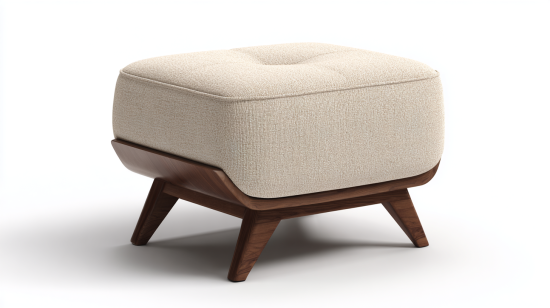
An ottoman used as a coffee table is typically an upholstered piece, often with a soft, cushioned top. Some ottomans are specifically designed for coffee table duty and have firmer tops or come with tray tops that create a stable surface. They offer that same central positioning but with a softer, cozier aesthetic.
The big advantage of ottomans versus traditional coffee tables? Extra seating. When you have more guests than chairs, an ottoman can accommodate additional people. They’re also wonderful for propping up your feet, which is harder to do comfortably with a traditional coffee table (trust me, I’ve tried).
The drawback? Stability for functional use. Setting drinks directly on an upholstered ottoman is asking for disaster. Most people use a large tray on top to create a stable surface. I’ve done this, and while it works, you lose some of the soft, cozy appeal that made you choose an ottoman in the first place.
Ottomans are also typically lighter and easier to move, which can be an advantage for flexibility. But that same lightness means they’re less substantial and might not anchor a room as effectively as a solid coffee table.
I’ve flip-flopped between the two over the years. Currently, I have a traditional coffee table because I need that hard surface daily for work and dining. But I have friends with ottomans who love the versatility and comfort they provide. It genuinely depends on your lifestyle and priorities.
For families with young kids, ottomans have a safety advantage—no hard edges or corners. But they’re also more likely to show stains and wear from sticky fingers and constant use.
The DIY Route: Creating Your Own Coffee Table
How to DIY a coffee table for my living room? Oh man, this brings back memories of my DIY phase, complete with saw dust everywhere and several learning experiences.
I built my first coffee table from reclaimed pallets, and honestly, it turned out better than expected. It wasn’t perfect—the pallets weren’t completely uniform, and I definitely learned about the importance of properly sanding wood (splinters are no joke). But it had character, it was functional, and I’d spent maybe $40 total including wood stain and the hairpin legs I ordered online.
DIY coffee tables can range from simple to complex depending on your skill level and tools. For beginners, I recommend starting with pre-made elements. Buy legs (hairpin legs are trendy and easy to attach), and build or buy a top. Attach the two, add finish, and you have a custom coffee table.
My favorite beginner-friendly approach is using wood rounds or thick wood slabs. You can often find these at lumber yards or specialty wood stores. They come pre-cut in various diameters. Sand them smooth, apply your chosen finish (I love Danish oil for a natural look), attach pre-made legs, and you’re done. Total time investment: maybe 4-6 hours spread over a weekend.
For the slightly more ambitious, building a frame-style table isn’t as difficult as it sounds. Basic 2x4s or 2x6s, wood glue, screws, and a saw are your main tools. There are countless free plans online with step-by-step instructions. I built a simple X-frame table this way, and while it required more time and precision, the result was totally worth it.
The absolute easiest DIY coffee table? Stacked vintage suitcases or trunks. Find three or four interesting old suitcases (thrift stores and estate sales are goldmines), stack them securely, maybe add some brackets between layers for stability, and place a piece of cut glass on top for a stable surface. Instant conversation piece with built-in storage.
My tips for DIY success: measure twice, cut once (I cannot stress this enough), invest in good sandpaper and sand more than you think necessary, and don’t skip the finish—it protects your work and makes everything look polished. Also, watch YouTube tutorials—seeing someone do it makes it much less intimidating than reading instructions.
The beauty of DIY is complete customization. You choose dimensions perfect for your space, colors that match your décor, and features you actually need. Plus, there’s genuine satisfaction in using something you built with your own hands.
Final Thoughts: Your Coffee Table Journey
Finding the perfect coffee table is part science, part art, and part gut instinct. I’ve shared my experiences, mistakes, and hard-won wisdom, but ultimately, your perfect table might look nothing like mine. And that’s exactly how it should be.
The most important thing I’ve learned? Your coffee table should work for your actual life, not the life you think you should have. If you eat meals there daily, own that and choose accordingly. If you never set anything on it and it’s purely decorative, that’s valid too. If you need storage for your collection of remote controls and chargers, don’t let anyone tell you that hidden storage is “less sophisticated.”
Consider your practical needs first, then layer in style preferences. Think about who lives with you, how you use your space, and what will genuinely make your daily life better. A coffee table you love but can’t practically use will eventually frustrate you. A practical table you find ugly will make you sad every time you look at it. The sweet spot is both beautiful and functional—and that balance looks different for everyone.
Take your time with this decision. I know furniture shopping can feel overwhelming, especially with seemingly infinite options. But this piece will be central to your living space, probably for years. It’s worth the effort to find something you truly love.
And remember: there’s no such thing as a perfect coffee table that works for everyone. There’s only the perfect coffee table for you, your space, and your life. Trust your instincts, do your research, and don’t be afraid to wait for the right piece rather than settling for something that’s merely okay.
Now, if you’ll excuse me, I have some coffee table styling to rework. Because even with all this knowledge, I’m never quite done tweaking and improving my setup. And honestly? That’s part of the fun.