

Adjustable Ottoman Stool White Vanity Stool Vanity Chair for Makeup Room Stool Chair for Vanity Stool with Storage Makeup Stools with Storage Swivel Makeup Chair for Bathroom Faux Leather
- 【Adjustable Ottoman Vanity Stool with Storage】: this makeup stools for vanity has Φ13 inch Seat and 6.3 inch thick vanity seat. Seat Height adjustable from 17.7 inches to 23.2 inches, this chair for vanity is suitable for teenagers girls as well.
- 【Great Utility for all room】: This RUCUKEN vanity chair vanity stool for makeup room is a perfect choose for your home. It is suitable as a stool chair for vanity, bathroom, as a 18 inches foot stool, as a side table etc. Storage space allows you to store some small items and keep the room tidy.
- 【【High Quality Materials】】: this white makeup vanity stool seat is made of high quality faux leaher. bathroom vanity stool has thick Seat Cushion, vanity chair for makeup room with Sturdy Chrome Finish Metal Base. It is a comfortable & stable vanity stools for bathroom. stain, scratch, crack proof vanity stool
- 【Adjustable and 360°Swivel Vanity Stool 】: 360 Degrees Swivel vanity chair for makeup room, The gas-lift bar used for adjustment has passed the BIFMA safety certification issued by the SGS organization. the bottom is equipped with a rubber ring to prevent you from slipping when rotating the tufted ottoman vanity stool for makeup room. Easy to install this vanity stool bathroom in only 5 minutes.
- 【Our Service】Our vanity stools provide a 2-year warranty. If you have any problems with our vanity chair, please contact us. We will solve all problems for you within 10 hours. Wishing you a happy life.
$36.75

Thgonwid Unstuffed Moroccan Storage Pouf Foot Stool Ottoman Seat Handmade Faux Leather Bean Bag Floor Chair Foot Rest for Living Room, Bedroom or Balcony (Light Brown)
- 【UNSTUFFED DESIGN – FILL IT YOURSELF】: This fillable Moroccan pouf arrives COMPLETELY UNSTUFFED (no filling inside) – you choose the stuffing material and firmness! Easy to fill with polyester fiber, recycled foam, old clothes, or towels – simply fill the 83L capacity full for ideal comfort. Includes heavy-duty hidden zipper for quick DIY setup!
- COMFORT and DURABILITY: Made with high quality Faux Leather. Each Leather pouf ottoman dimension is approximately 21.7” dia and 13.7” high and the perfect size for your home! Thgonwid pouf is designed to hold 220 lbs. Delivering outstanding comfort and withstand everyday use.
- HIGH QUALITY MATERIAL AND CRAFTSMANSHIP:These premium Morocco leather pouf ottomans is stylish, and made with quality and care! The combination of the textured feel, it makes for the ideal footstool in your living room! The invisible zipper design does not rub the floor when moving, zipper’s durability make it easy for open and close.
- STYLISH FOOTSTOOL: This premium handmade moroccan pouf leather footstool will be the perfect addition to your home and living space! Thgonwid ottoman is great for comfortable foot stool, extra seating, coffee table, lazy sofa,home decoration and a great way to add style and personality to your space. It is a good large storage bag, It can store toys, clothes, blankets, etc. It can be easily carried and moved so that you can have a picnic outdoors, party and so on.
- EASY TO CLEAN and FOLDABLE: Wipe clean faux leather surface , just damp cloth! resists spills and stains. Space saving collapsible design folds flat for storage in closets, under beds, or drawers. Lightweight yet durable for indoor and outdoor versatility.
$32.99

Round Pouf Ottoman Stuffed 20×12 Inches Floor Pouf Chair for Living Room Bedroom Modern Foam Pouf Ottoman Foot Rest for Couch Home Decor Pouffe Sage Green
- 【Premium High-Density Foam Ottoman Foot Rest】Plush fiber ottoman pouf cover+ one-piece high resilient foam that’s firm and supportive, yet soft for comfort.this ottoman foot rest offers lasting comfort and support.
- 【Versatile Stuffed Pouf Ottoman】This multi-functional pouf ottoman is perfect for any space—whether it’s your bedroom, living room, home office, or even a kids’ room. Use it as a footrest, extra seating, side table, coffee table accent, floor cushion, or cozy lounge spot. Lightweight yet sturdy, it adds both style and practicality to your decor.
- 【Practical Ottoman Pouf】20x20x12″Inches,20″Inches width provides ample space for both legs and foot, ensuring maximum relaxation. 12″ Inches height elevates your foot at the right angles and height for promoting healthy blood circulation.
- 【No Need Assemble】Vacuum-packed for efficiency, please allow the ottoman pouf up to 72 hours to fully expand. if still did not return to the full size,please steam the pouf ottoman to remove wrinkles.Achieve optimal foam hardness within 7 days for enduring support.
- 【High Quality Plush Fiber Pouf Ottoman is more Comfortable and Durable than Leather Material】 Made of high quality plush fiber which with thick backing,this comfortable and durable material perfectly holds the shape, it’s easy to clean with delicate cycle machine wash.
$47.10

Wimarsbon Storage Ottoman, Vanity Stools with Metal Legs, 16.5″ x 11.8″ x 18″ Modern Faux Mink Fur Footstool, Makeup Chair with Anti-Slip Feet, Accent Table,Footrest,Storage Bench for Bedroom
- DIMENSIONS: Each ottoman measurements are 16.5″ L x 12″ W x 18″ H inches when assembled and offers a 250-pound capacity. Plush, multi-density cushioning provides a soft but supportive seat. With an array of colors to choose
- WIDELY USE: Compact rectangle footstool easily transitions from foot rest, to seat, to perfect vanity chair, to side table when topped with a tray.Fits great in small spaces, extra seating when you have guests over. A perfect gift idea for friends
- MULTIFUNCTIONAL DESIGN: Our super soft faux fur mink Ottomans are super practical, providing pure relaxation and comfort. Adds modern appeal to any home, living room, bedroom, office, fashion closet. Extra seating when you have guests over
- PROTECT AND CARE: Spot clean seat cushion cover only on visible stains and spots using mild soap and a clean, soft towel. Metal hairpin legs may be wiped with a clean, damp towel
- Easy to assemble: This one comes complete with mounting tools, and it only takes you a few minutes to screw the metal feet into place. It is easy to install, you can give it to your parents, friends, wife, this is a perfect gift
$34.19

Modern Swivel Ottoman Vanity Chair, Sherpa Upholstered Barrel Club Chairs 360°Degree Swivel Side Chair with Storage, Comfy Makeup Stool for Bedroom Living Room, White
- Comfy: The whole makeup chair is wrapped in soft sherpa fabric, and the upholstered seat cushion is full filled with high density sponge, offer you a comfortable sit feeling. And the barrel backrest can provide a good support for your back, you will not feel tired even make up for a long time
- Unique Design: The chic and unique design make this chair be stylish and modern, the seat can be removed, and there is a large size for you to store the magazine, book or cloths. And the backrest can be moved, you can put the backrest down when you want to save this chair under your makeup desk, make full use of space
- Any Occasion: It a good makeup stool for your bedroom, it also can be a ottoman or side chair for your living room, with its storage and 360 degree swivel function, our this barrel chair is a good addition to your home
- Dimensions: Overall Size: 19’’W x 19’’D x 26.75’’H ; Seat Size: 16.5’’W x 16.5’’D x 17.5’’H; Back Size: 9’’H; Weight capacity: 250 lbs
- Fully assembly: The swivel accent chair arrives fully assembled. No assembly is required
$132.29
Discovering the Art of Multi-Functional Furniture That Transforms Your Living Space
I’ll never forget the moment I realized my living room was missing something crucial. It wasn’t another throw pillow or yet another decorative vase—it was a piece of furniture that could actually work for me. That’s when I stumbled upon the world of ottoman chairs, and honestly, my entire perspective on functional design shifted overnight.
Let me take you on this journey I’ve been on, exploring everything there is to know about these versatile pieces of furniture. Whether you’re furnishing your first apartment, redesigning your family home, or just looking for that perfect accent piece, I’ve learned enough through my own trial and error to help you navigate this surprisingly complex world of ottoman chairs.
What Exactly Is an Ottoman Chair, Anyway?
When I first started my search, I was genuinely confused about what defines an ottoman chair. The term itself seems almost contradictory—is it an ottoman or is it a chair? Through my research and hands-on experience, I’ve come to understand that an ottoman chair is essentially a low, upholstered seat without arms or a back, though some modern interpretations blur these lines beautifully.
The traditional ottoman originated in the Ottoman Empire (hence the name), where these low seating options were piled with cushions and used for lounging. Today’s ottoman chairs have evolved significantly. They’re typically padded, upholstered pieces that can function as footstools, extra seating, coffee tables, or even storage solutions. What makes them “chairs” is their reinforced structure and seating capacity—they’re built to support a person’s full weight comfortably, unlike decorative poufs.
I’ve found that the beauty of an ottoman chair lies in its versatility. Mine currently sits at the foot of my reading chair, but I’ve used it as emergency seating during dinner parties, a footrest during movie marathons, and even as a makeshift side table when I’m too lazy to get up for my coffee. This multi-functionality is what initially drew me to these pieces, and it’s why I’m now somewhat obsessed with helping others find their perfect match.
How I Learned to Choose the Best Ottoman Chair for My Living Room
Choosing my first ottoman chair was overwhelming. I walked into furniture stores feeling confident and walked out feeling like I needed a degree in interior design. But through my mistakes and eventual successes, I’ve developed a framework that actually works.
Size is everything. I made the rookie mistake of falling in love with a gorgeous oversized ottoman chair at a showroom, only to realize it completely overwhelmed my modest living room. Now, I always measure my space first—and I mean really measure. I consider not just the ottoman’s footprint but also the visual weight it adds to the room. For my living room, I found that an ottoman chair measuring roughly 24 to 30 inches square worked perfectly, providing functionality without dominating the space.
Style coherence matters more than I expected. I’m naturally drawn to eclectic design, but I learned that your ottoman chair needs to have at least some connection to your existing furniture. This doesn’t mean everything has to match—I actually find that boring—but there should be a conversation between pieces. When my living room featured mostly mid-century modern furniture with clean lines, I chose an ottoman chair with similar wooden legs and simple upholstery, but I went bold with a vibrant geometric pattern to keep things interesting.
Comfort isn’t just about softness. My first ottoman was so plush it felt like sitting on a cloud, but it was actually uncomfortable for prolonged sitting because I sank too far down. The ideal ottoman chair has enough cushioning to be comfortable but sufficient firmness to provide support. I now test ottoman chairs by sitting on them for at least five minutes, shifting my position multiple times, and even using them as a footrest to see how they perform in different roles.
Height considerations changed everything for me. The height of your ottoman chair should relate to the seating it accompanies. For use as a footrest with a standard sofa, I found that 14 to 18 inches high works beautifully. When I wanted one for standalone seating or coffee table use, I went slightly taller, around 18 to 20 inches, which felt more substantial and practical.
The Benefits of an Ottoman Chair That Nobody Talks About
Everyone mentions that ottoman chairs are versatile, but let me tell you about the benefits I discovered that genuinely surprised me and changed how I use my living space.
They’re social furniture. Unlike traditional chairs with arms that create barriers, ottoman chairs are invitation seating. During gatherings, I’ve noticed people naturally gravitate toward them, sitting casually or perching on the edge for animated conversations. There’s something about the informal nature of an ottoman chair that makes guests feel immediately comfortable and relaxed in my space.
They’re psychological space-savers. Even though my ottoman chair takes up physical floor space, it actually makes my room feel larger because it doesn’t have a tall back blocking sightlines. This open quality creates better flow and makes the room feel more breathable and spacious, which is particularly valuable in my urban apartment where every square foot counts.
They force better posture in unexpected ways. When I use my ottoman chair for actual sitting rather than just as a footrest, I’ve noticed I sit with better posture because there’s no back to slouch against. It’s become my favorite perch for activities requiring focus, like sorting mail or doing quick laptop work, because it keeps me engaged and alert.
They’re instant room refreshers. Because ottoman chairs are relatively small investments compared to sofas or armchairs, they’re perfect for updating your space without a complete renovation. I’ve reupholstered mine twice over the years, completely transforming my room’s aesthetic each time for a fraction of what new major furniture would cost.
They’re meditation-friendly. I never expected this benefit, but my ottoman chair has become my favorite spot for meditation and breathing exercises. The low height and firm support make it ideal for sitting cross-legged, and the lack of arms or back keeps me mindful of my posture and positioning.
Where to Actually Find a Stylish Ottoman Chair
When I started hunting for my ottoman chair, I quickly realized that knowing where to look is half the battle. Different sources offer vastly different experiences, price points, and quality levels.
Traditional furniture stores remain my go-to for hands-on evaluation. There’s something irreplaceable about sitting on an ottoman chair, feeling the fabric, and seeing the construction quality in person. I discovered my current favorite at a local furniture boutique where the owner actually explained the kiln-dried hardwood frame and double-doweled joints—details I never would have appreciated from online photos.
Online retailers have surprised me with their range and value. Initially skeptical about buying furniture sight unseen, I’ve had success with detailed product descriptions and generous return policies. The key is reading reviews obsessively and understanding the return logistics before ordering. I once bought a beautiful ottoman chair online that looked perfect in photos but arrived in a shade of gray that clashed terribly with my walls—thankfully, the return was hassle-free.
Antique stores and estate sales became unexpected treasures for finding unique ottoman chairs. I found a mid-century gem at an estate sale that just needed reupholstering. The bones were solid hardwood, and after investing in new fabric and foam, I had a one-of-a-kind ottoman chair that became a conversation piece and cost less than half what a comparable new piece would have.
Custom furniture makers opened up possibilities I hadn’t considered. For my home office, I worked with a local upholsterer to create an ottoman chair with exactly the dimensions, fabric, and firmness I wanted. Yes, it cost more upfront, but knowing it was built to my exact specifications and using quality materials made it worth every penny.
Best Ottoman Chairs for Small Spaces: What I’ve Learned
Living in a small apartment taught me that ottoman chairs for small spaces require strategic thinking. Not every compact ottoman chair is created equal, and some work significantly better than others in tight quarters.
Round ottoman chairs have become my small-space favorites because they lack sharp corners that catch on clothing or create awkward traffic patterns. I have a 24-inch round ottoman in my reading nook that provides all the functionality of a square piece but feels less imposing and allows for better traffic flow around it.
Nesting ottoman chairs changed my entertaining game completely. I invested in a set of three graduated-size ottoman chairs that nest inside each other when not in use. During normal days, I keep the largest one out as a footrest, but when friends visit, I can pull out all three for extra seating—then they disappear back into each other afterward. This storage-friendly approach to ottoman chairs is genius for small spaces.
Slim-profile ottoman chairs work wonders in narrow spaces. I found one that’s deliberately designed with a rectangular shape—about 30 inches long but only 16 inches deep. This slim ottoman chair fits perfectly in the narrow space between my sofa and wall, providing a footrest without making the room feel crowded.
Multi-functional pieces are essential in small living. My bedroom ottoman chair lifts up to reveal storage inside, eliminating the need for a separate storage box. This dual-purpose design means I’m not sacrificing precious floor space for single-function furniture, which is crucial in my 600-square-foot apartment.
The Storage Ottoman Chair Revolution
Storage ottoman chairs deserve their own discussion because they genuinely transformed how I organize my living space. The concept seems simple—an ottoman chair with a hollow interior—but the execution and utility vary wildly.
My first storage ottoman chair had a hinged top that opened to reveal a cavernous interior perfect for blankets and seasonal items. The surprise benefit was that the storage made the ottoman chair heavier and more stable, which actually improved its functionality as seating. However, I learned that easy-lift hydraulics are essential—manually lifting a heavy lid repeatedly gets old fast.
I’ve since experimented with drawered ottoman chairs that feature pull-out drawers on the sides rather than lift-top designs. These work beautifully for items I access frequently, like remote controls, magazines, or craft supplies. The divided storage keeps things more organized than the single-cavity design, though they typically offer less total storage volume.
The construction quality of storage ottoman chairs matters immensely. Cheaper versions I’ve encountered have weak hinges that broke within months or poorly fitted lids that warped and no longer closed properly. Now I specifically look for solid wood frames, piano hinges (they’re much more durable), and reinforced corners that can handle the stress of repeated opening and closing.
Ottoman Chair vs. Pouf: Understanding the Real Difference
I used to use these terms interchangeably until I learned there are meaningful distinctions between an ottoman chair and a pouf. Understanding these differences prevented me from making a costly purchasing mistake.
Structural integrity is the primary differentiator. Ottoman chairs have solid frames—usually wood or metal—and are specifically engineered to support a person’s full weight consistently. Poufs, on the other hand, are typically stuffed fabric bags, often filled with beans, foam scraps, or even recycled materials. While they can support weight, they’re generally less stable and compress significantly over time.
Durability and longevity favor ottoman chairs dramatically. My pouf needed replacement after just two years of regular use—the filling had compressed unevenly, creating an uncomfortable lumpy surface. Meanwhile, my ottoman chair from the same period still looks and feels like new because its structured cushioning maintains its shape and support.
Formal versus casual is another distinction I’ve noticed. Poufs have an inherently relaxed, bohemian vibe that works beautifully in casual spaces but feels out of place in more formal settings. Ottoman chairs, depending on their design and upholstery, can span from casual to extremely formal, making them more versatile across different interior design styles.
Price points reflect these functional differences. Quality ottoman chairs typically start around $150 and can easily exceed $500 for high-end versions, while poufs usually range from $50 to $200. For me, the investment in a proper ottoman chair proved more economical long-term because I haven’t needed to replace it.
What You’ll Actually Pay for a Quality Ottoman Chair
The pricing of ottoman chairs initially confused me because the range is enormous—from under $100 to well over $1,000. Through my purchasing experiences, I’ve developed a realistic understanding of what different price tiers actually deliver.
Budget ottoman chairs ($75-$150) can be functional but require careful evaluation. I’ve had mixed experiences in this range. My advice is to focus on simple designs with minimal additional features. A basic upholstered cube from a reputable mass-market brand at $120 has served me well in my home office, but a $90 “leather” ottoman with storage that I bought online fell apart within months—the synthetic material cracked and the particle board frame literally split.
Mid-range ottoman chairs ($150-$400) offer the best value for most people. This is where I’ve found the sweet spot between quality and affordability. In this range, you’re getting solid wood frames, quality foam cushioning, durable upholstery fabrics, and reliable construction. My living room ottoman chair, purchased for $275, features kiln-dried hardwood framing and high-density foam that’s maintained its shape for three years of daily use.
Premium ottoman chairs ($400-$800) deliver noticeable quality improvements. When I splurged on an $550 ottoman chair for my bedroom, the difference was immediately apparent—the leather was genuine and beautifully finished, the frame was reinforced hardwood with corner blocks, and the cushioning used layered foam with a down-fiber topper for incredible comfort. The craftsmanship was evident in the hand-tufting and perfectly aligned upholstery seams.
Luxury ottoman chairs ($800+) enter the realm of investment furniture and design statements. I’ve admired these pieces in showrooms—we’re talking designer fabrics, hand-carved frames, artisan craftsmanship, and materials like exotic hardwoods or premium full-grain leather. While beautiful, I personally find it hard to justify these prices unless the ottoman chair is a statement piece in a formal living room or you simply have the budget for luxury items.
Material Matters: What Your Ottoman Chair is Really Made Of
Understanding materials used in ottoman chairs became crucial when I started making informed purchasing decisions. The materials dramatically affect not just appearance and price but also durability, maintenance, and comfort.
Fabric upholstery remains the most popular and versatile choice. My cotton-blend ottoman chair in the living room offers a soft, inviting texture that’s perfect for casual spaces. I learned to look for fabrics with a tight weave and decent thread count—anything under 15,000 double rubs wears too quickly in high-traffic areas. Linen gives a sophisticated look but wrinkles easily (learned that the hard way). Performance fabrics like Crypton or Sunbrella are game-changers if you have kids or pets—my Crypton-upholstered ottoman chair in the family room has survived spills, pet hair, and sticky hands without showing wear.
Leather ottoman chairs exude luxury and age beautifully when properly maintained. I invested in a genuine leather ottoman chair for my reading corner, and three years later, it’s developed a gorgeous patina that adds character. Full-grain leather is the highest quality—it’s more expensive but wears beautifully. Top-grain leather is more affordable and still looks great. However, avoid “bonded leather” or “genuine leather” that’s not specified as full or top-grain—I made this mistake once, and the material began flaking and peeling within a year.
Velvet upholstery creates stunning visual impact. My emerald velvet ottoman chair is absolutely gorgeous and adds incredible richness to my space, but I’ll be honest—it requires more maintenance. Velvet shows pressure marks (though they brush out easily), and it’s more delicate than other fabrics. However, modern performance velvets have improved durability significantly, making them more practical than traditional velvet options.
Faux leather or vinyl has come a long way. While I was initially skeptical, high-quality faux leather ottoman chairs can look remarkably authentic and offer practical benefits like easy cleaning and animal-friendly materials. The key is investing in better-quality versions—cheap vinyl looks cheap and cracks quickly, but premium faux leather can be difficult to distinguish from the real thing.
Frame materials matter more than most people realize. Hardwood frames (oak, maple, birch) provide superior strength and longevity. My hardwood-framed ottoman chair feels rock-solid, while a friend’s particle board ottoman chair developed wobbles and creaks within months. Engineered wood can work in budget pieces but look for plywood rather than particle board—it’s much more durable.
Cleaning and Maintaining Your Ottoman Chair: Real-World Experience
I’ll admit I initially neglected maintenance on my ottoman chairs, assuming they’d somehow stay pristine on their own. Spoiler alert: they didn’t. Learning proper cleaning and maintenance has extended the life of my ottoman chairs significantly.
Regular vacuuming is the most underrated maintenance task. I vacuum my fabric ottoman chairs weekly using the upholstery attachment, which prevents dust and dirt from embedding into the fibers. This simple habit has kept my ottoman chairs looking fresh and prevented the dulling that occurs when dust accumulates.
Immediate spot cleaning saves the day repeatedly. When someone spilled red wine on my beige ottoman chair during a party (my personal nightmare), I immediately blotted—never rubbed—the spill with a clean white cloth, working from the outside in. Then I used a mixture of mild dish soap and water, blotting gently until the stain lifted. Had I waited even 30 minutes, that stain would have set permanently.
Professional cleaning once a year makes a noticeable difference. I have my most-used ottoman chairs professionally cleaned annually, and it’s amazing how much dirt they remove even though the pieces look clean. The investment (usually $50-75 per ottoman chair) is worthwhile for maintaining the appearance and extending the furniture’s life.
Leather conditioning every 6-12 months keeps my leather ottoman chairs supple and prevents cracking. I use a quality leather conditioner specifically formulated for furniture leather, applying it with a soft cloth in circular motions. This regular conditioning has kept my leather ottoman chair looking salon-fresh despite daily use.
Rotation and flipping helps prevent uneven wear. If your ottoman chair has a reversible cushion, flip it regularly. I rotate my ottoman chairs’ positions in the room every few months so they don’t wear unevenly from sun exposure or traffic patterns. This simple practice has kept all surfaces wearing uniformly.
Protection strategies I wish I’d implemented from day one include using fabric protector spray on new upholstery and placing my ottoman chairs away from direct sunlight, which fades fabrics surprisingly quickly. I learned this lesson when one side of my ottoman chair became noticeably lighter than the other after a summer in direct sun.
Ottoman Chairs for Modern Interiors: My Styling Journey
Integrating ottoman chairs into modern interiors requires understanding how these pieces interact with contemporary design principles. My own modern aesthetic has evolved alongside my ottoman chair collection.
Minimalist modern spaces demand ottoman chairs with clean lines and simple forms. My bedroom ottoman chair is a perfect cube upholstered in smooth gray fabric with hidden legs, creating a floating appearance that’s quintessentially modern. The lack of ornamentation and the geometric precision make it feel intentional and sophisticated rather than merely functional.
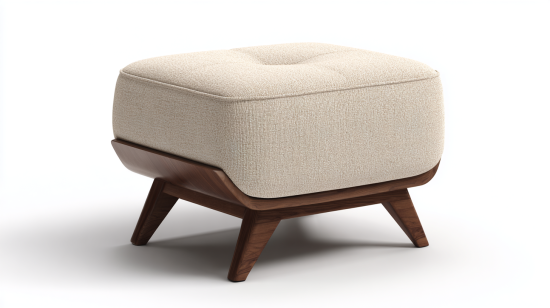
Mid-century modern settings pair beautifully with ottoman chairs featuring wooden legs in walnut or teak finishes. I found a stunning ottoman chair with angled wooden legs and button tufting that bridges vintage and contemporary sensibilities. The key in mid-century spaces is finding pieces that reference the era without being costume-y—clean lines, quality materials, and subtle retro touches work better than obvious reproductions.
Industrial modern aesthetics benefit from ottoman chairs with unexpected materials. My studio space features an ottoman chair with a distressed leather top and visible metal framing that echoes the exposed brick and metal shelving. The raw, unfinished quality of industrial design allows ottoman chairs to function as textural counterpoints to harder surfaces.
Scandinavian modern design showcases ottoman chairs in light woods and neutral fabrics. The natural birch legs and pale gray wool upholstery on my living room ottoman chair embody the Scandinavian principles of simplicity, functionality, and connection to nature. These ottoman chairs work beautifully in light-filled spaces with minimal color palettes.
Contemporary eclectic modern gives the most freedom for bold ottoman chair choices. My guest room features a vibrant patterned ottoman chair that adds energy without overwhelming the space. In modern eclectic settings, ottoman chairs can serve as accent pieces that inject personality and color while maintaining the overall modern aesthetic.
The Coffee Table Alternative: Ottoman Chairs That Actually Work
Using an ottoman chair as a coffee table seemed risky to me initially, but it’s become one of my favorite design solutions. Not all ottoman chairs work for this purpose, though—I learned through trial and error.
Surface stability is crucial. My first attempt at using a soft, pillow-top ottoman chair as a coffee table was a disaster—drinks tipped, books slid off, and it was generally useless. Now I only use ottoman chairs with firm, flat surfaces for this purpose. Some ottoman chairs come with removable trays specifically designed to create a stable surface, which is brilliant.
Height considerations matter significantly. A coffee table ottoman chair should be roughly the same height as your sofa seat or slightly lower—typically 16-18 inches. I positioned one ottoman chair at 20 inches high in front of my sofa, and it felt awkward because leaning over to use it was uncomfortable. When I replaced it with an 18-inch version, everything clicked into place.
Practical benefits of ottoman chair coffee tables have won me over completely. Unlike traditional hard-edge coffee tables, I’ve never bruised my shin on my ottoman chair (a near-daily occurrence with my old glass coffee table). When I have guests, I can push it aside easily for better traffic flow, and it doubles as extra seating when needed—try doing that with a traditional coffee table.
Styling ottoman chair coffee tables requires different approaches than traditional coffee tables. I use a decorative tray to corral items like candles and remote controls, which keeps things organized and creates visual cohesion. A stack of oversized art books works beautifully as both decoration and practical surface-raisers for drinks. The ottoman chair as coffee table approach has made my living room feel more casual and inviting.
Comfort Levels: Are Ottoman Chairs Actually Good for Sitting?
The question of whether ottoman chairs are comfortable for seating doesn’t have a simple answer—it completely depends on the design, your expectations, and how you’re using them.
Duration matters tremendously. I find my ottoman chairs perfectly comfortable for seating periods of up to 30-45 minutes. They’re ideal for perching during conversations, putting on shoes, or taking a brief rest. However, for extended sitting during a long movie or reading session, I prefer my regular armchair. The lack of back support on an ottoman chair becomes noticeable during longer sitting periods.
Cushioning firmness makes or breaks the sitting experience. Medium-firm ottoman chairs work best for actual seating—soft enough to be comfortable but firm enough to provide support and prevent excessive sinking. My ultra-plush ottoman chair feels luxurious under my feet but is actually uncomfortable for sitting because I sink too deeply and struggle to maintain good posture.
Size and proportion affect comfort significantly. Larger ottoman chairs (around 30 inches square or more) provide enough surface area to sit comfortably with your legs in various positions, while smaller ottoman chairs (under 20 inches) feel cramped and are really only suitable for perching on the edge. My 26-inch square ottoman chair hits the sweet spot—large enough to sit cross-legged if I want but not so large it overwhelms the space.
Surface texture influences the sitting experience more than I initially expected. Smooth leather or vinyl ottoman chairs can feel slippery, making it harder to settle into a comfortable position. Textured fabrics like linen or performance weaves provide subtle grip that helps you feel more securely seated. My velvet ottoman chair is actually quite comfortable for sitting because the texture provides gentle resistance.
Matching Ottoman Chairs with Existing Furniture: My Design Philosophy
Learning how to match an ottoman chair with existing furniture was a process of making mistakes and discovering what actually works versus what design theory suggests.
The matchy-matchy trap caught me initially. I bought an ottoman chair in the exact same fabric as my sofa, thinking this would create cohesion. Instead, it looked like I couldn’t make decisions and just bought everything from the same collection. Now I aim for complementary rather than matching—my gray sofa pairs beautifully with an ottoman chair in a gray-and-white geometric pattern that references the sofa color without replicating it.
Color relationships matter more than exact matches. I’ve had success using ottoman chairs that pull accent colors from existing furniture or artwork. When my living room featured a navy sofa and rust-colored throw pillows, I introduced a rust-colored ottoman chair that created visual coherence without matching anything exactly. This approach makes the room feel intentionally designed rather than accidentally coordinated.
Style bridging works when you’re mixing furniture periods. My living room combines a mid-century modern sofa with traditional armchairs (inherited from family), and my ottoman chair with classic rolled edges but clean-lined wooden legs bridges these styles beautifully. The ottoman chair references both periods without fully committing to either, creating transition rather than conflict.
Contrast can be your friend. Some of my best furniture combinations involve deliberate contrast. My heavy, dark leather armchair pairs surprisingly well with a light linen ottoman chair—the contrast in weight, texture, and color creates visual interest and prevents the corner from feeling too heavy or dark. Don’t be afraid of ottoman chairs that differ substantially from your existing furniture.
Metal and wood coordination requires attention but not precision. My ottoman chair has walnut legs, while my coffee table is oak, and my bookshelf is painted white wood. They don’t match, but they all work together because I’ve been consistent with the finish quality—everything has either a matte or satin finish, never glossy. This subtle coordination creates cohesion without requiring exact matches.
Storage Compartments: Built-In Functionality That Changed Everything
Ottoman chairs with built-in storage compartments represent the pinnacle of functional furniture design in my opinion. The evolution from simple hollow storage to sophisticated compartmentalized systems has been remarkable.
Single-cavity storage is the most common configuration. My bedroom ottoman chair opens to reveal one large compartment perfect for storing extra bedding, seasonal clothing, or items I don’t need to access frequently. The advantage is maximum storage capacity—I can fit two full blankets and several throw pillows inside. The downside is that everything gets jumbled together, making it less ideal for items I need to access regularly.
Divided storage has proven more practical for daily use. My living room ottoman chair features a removable divider that creates two sections, allowing me to separate items logically—magazines and books in one section, throw blankets in the other. This organization means I can actually find things without excavating the entire contents, which happened embarrassingly often with my single-cavity ottoman.
Drawer-based storage offers the ultimate in organization. I recently acquired an ottoman chair with two pull-out drawers on opposite sides, and it’s transformed my living room organization. One drawer holds remote controls, coasters, and small items that previously cluttered my coffee table, while the other contains craft supplies I use regularly. The drawers keep everything dust-free and organized without requiring me to lift a heavy top.
Hidden storage mechanisms range from simple to sophisticated. Basic flip-top lids work fine but require you to remove everything from the ottoman chair’s surface before opening. Ottoman chairs with hydraulic lifts are much more convenient—they hold the lid open hands-free and close gently without slamming. Side-hinged lids allow partial access without fully clearing the top. My favorite ottoman chair has a removable cushioned top that lifts off completely, giving me full access to the storage below while allowing me to set the heavy cushion aside rather than holding it open.
Budget-Friendly Ottoman Chairs That Don’t Sacrifice Quality
Finding budget-friendly ottoman chair options became a personal mission after I spent too much on some pieces and regretted it. I’ve learned where you can save money and where you absolutely shouldn’t.
Mass-market retailers offer surprisingly decent ottoman chairs if you’re selective. I found a fantastic option at a major furniture chain for $129 that featured solid wood legs (not plastic), decent foam density, and serviceable fabric. The secret was choosing the simplest design available—no tufting, no storage, no fancy details—just a well-constructed basic ottoman chair. It’s served beautifully in my guest room for two years.
End-of-season sales yield incredible deals on quality pieces. I saved nearly 60% on a high-end ottoman chair by purchasing it during a store’s summer clearance sale. The ottoman chair was in a blue fabric that hadn’t sold well during spring, but it was exactly what I needed for my home office. Patience and timing can dramatically reduce costs on quality furniture.
Floor models and displays are often sold at steep discounts. I negotiated a 40% discount on a showroom floor ottoman chair that had minor wear on one corner—wear that would have appeared naturally within months of regular use anyway. These pieces have been gently used at most and often come with the same warranty as new items. I always ask about floor models when shopping.
DIY and upcycling options drastically reduce costs if you’re willing to invest time. I purchased a structurally sound but ugly ottoman chair at a thrift store for $25, then reupholstered it myself with $40 worth of fabric from a fabric store remnant bin. The total investment of $65 plus a weekend’s work resulted in a custom ottoman chair that would have cost $300+ retail. This approach isn’t for everyone, but it’s incredibly rewarding.
Simple designs cost less almost universally. Button tufting, nail head trim, contrasting welts, and decorative legs all add cost. If you’re budget-conscious, choose an ottoman chair with clean lines and simple upholstery. These pieces are typically less expensive and, honestly, they age better because trendy details date quickly while simple designs remain classic.
DIY and Reupholstering: My Hands-On Adventures
Tackling DIY ottoman chair projects and reupholstering was intimidating initially, but it’s become one of my most satisfying hobbies. The process is more accessible than most people think.
My first reupholstering project was nerve-wracking but ultimately successful. I started with a simple cube ottoman chair that had outdated floral fabric. I carefully removed the old fabric, taking photos at each step to document how it was attached. The key was working slowly and methodically—rushing leads to mistakes. I measured carefully, cut conservatively (you can always trim more but can’t add fabric back), and used a staple gun to attach the new fabric. The ottoman chair transformation took about four hours and cost roughly $50 in materials.
Essential tools for DIY ottoman chair work include a staple gun (electric is much easier than manual), staple remover, sharp fabric scissors, measuring tape, and spray adhesive for foam if you’re replacing cushioning. I initially tried using a manual staple gun and gave up after my hand cramped—invest in an electric one if you’re doing more than one piece.
Fabric selection makes or breaks the project. I learned to buy extra fabric—I originally calculated I needed 2 yards but ran short and had to order more, which delayed my project by a week. Now I always buy 20-30% more than my calculations suggest. Upholstery-weight fabric is essential; regular quilting cotton isn’t durable enough for ottoman chairs that will be sat on regularly.
Foam replacement elevated my reupholstering projects significantly. Simply re-covering old, compressed foam results in a lumpy, uncomfortable ottoman chair. I now replace foam whenever I reupholster, which adds cost but dramatically improves the result. High-density foam lasts longer and provides better support than cheap foam, making it worth the extra expense for frequently used ottoman chairs.
Adding storage to a regular ottoman chair is entirely possible as a DIY project. I converted a solid cube ottoman chair into a storage piece by carefully cutting the upholstered top free from the base (leaving one side attached as a hinge), adding simple side supports, and attaching the top with piano hinges. This ottoman chair storage modification increased the piece’s functionality significantly and wasn’t as difficult as I’d feared.
Most Durable Ottoman Chairs for Daily Use
Understanding what makes durable ottoman chairs for everyday use saved me from repeatedly replacing worn-out pieces. Durability comes down to specific construction details and material choices.
Kiln-dried hardwood frames are the gold standard for durability. My most-used ottoman chair has a maple frame that’s survived three years of daily use in a high-traffic area without developing any wobbles or creaks. Compare this to a particleboard-framed ottoman chair I owned that became loose and unstable within six months. When shopping, I specifically ask about frame material and avoid pieces that won’t disclose this information—usually a sign of cheap construction.
Corner blocking and joinery matter more than most buyers realize. Quality ottoman chairs feature corner blocks—triangular wooden reinforcements where the frame pieces meet—that dramatically increase stability. Double-doweled joints provide much better strength than single dowels or simple butt joints. I learned to check for these details by tipping ottoman chairs slightly and checking for any flex or movement in the frame.
High-density foam cushioning (1.8 pounds per cubic foot or higher) maintains its shape and support far longer than cheap foam. My living room ottoman chair with high-density foam still feels supportive after three years, while a cheaper ottoman chair’s cushioning compressed into an uncomfortable, saggy mess within a year. The density information should be available on product tags or from sales staff.
Upholstery durability varies enormously by fabric type. Performance fabrics, leather, and tightly-woven natural fibers hold up best to regular use. The Martindale rub test measures fabric durability—look for ratings above 25,000 double rubs for heavily used pieces. My family room ottoman chair in a 40,000 double rub performance fabric looks nearly new after two years of kids, pets, and daily use.
Reinforced seams and proper upholstery techniques separate quality pieces from cheap ones. I learned to check seams carefully—they should be straight, tight, and free of puckers. Ottoman chairs with hand-tied springs last longer than those with sinuous springs, though both can be durable if properly constructed. My hand-tied spring ottoman chair has maintained perfect support while a friend’s sinuous spring version developed saggy spots.
Eco-Friendly Ottoman Chairs: Sustainable Choices That Matter
As I became more conscious about sustainability, finding eco-friendly ottoman chairs became increasingly important. The furniture industry’s environmental impact is significant, making conscious choices valuable.
Sustainably sourced wood frames represent the foundation of eco-friendly ottoman chairs. I specifically look for pieces certified by the Forest Stewardship Council (FSC), which ensures the wood comes from responsibly managed forests. My bedroom ottoman chair features FSC-certified maple, giving me confidence that my purchase didn’t contribute to deforestation. Some manufacturers also use reclaimed or recycled wood, which is even better environmentally.
Natural and organic fabrics offer sustainable upholstery options. I invested in an ottoman chair upholstered in organic cotton, which is grown without harmful pesticides and uses less water than conventional cotton. Linen, hemp, and wool are also excellent sustainable choices. My linen ottoman chair has developed a beautiful lived-in character while maintaining its durability, and I appreciate knowing it’s biodegradable at the end of its life.
Low-VOC materials and finishes protect both environmental and indoor air quality. Volatile organic compounds (VOCs) off-gas from many foams, adhesives, and finishes, contributing to air pollution and potential health issues. I now specifically seek ottoman chairs made with low-VOC adhesives and water-based finishes. The difference in chemical smell was immediately noticeable—my eco-friendly ottoman chair had virtually no odor compared to conventional pieces.
Recycled and recyclable materials increasingly appear in quality ottoman chairs. Some manufacturers use foam made from recycled plastic bottles or cushioning from recycled furniture foam. Others design ottoman chairs with materials that can be easily separated and recycled at end of life rather than ending up in landfills. While these pieces sometimes cost slightly more upfront, I appreciate the reduced environmental footprint.
Local manufacturing reduces the carbon footprint associated with transportation. When possible, I choose ottoman chairs made domestically rather than shipped from overseas. My locally-made ottoman chair not only reduced transportation emissions but also supported local craftspeople and allowed me to verify the construction quality and materials in person before purchasing.
Top Brands for Ottoman Chairs Worth Considering
Through my years of ottoman chair shopping and research, certain brands have consistently delivered quality, though top ottoman chair brands serve different needs and price points.
West Elm offers modern ottoman chairs with good quality at mid-range prices. I’ve owned two West Elm pieces that featured solid construction, current styling, and ethical manufacturing practices. Their designs trend modern and clean-lined, perfect for contemporary spaces. The quality isn’t quite luxury-tier, but it’s substantially better than budget furniture and backed by reasonable warranties.
Pottery Barn delivers classic designs with reliable construction. My Pottery Barn ottoman chair has a more traditional aesthetic but features quality materials and careful craftsmanship. The brand’s strength is timeless design that doesn’t look dated after a few years. Their pieces tend to be more expensive than West Elm but often go on sale.
Room & Board represents the upper-middle tier of ottoman chair brands. Their pieces feature American craftsmanship, customizable options, and genuinely impressive construction quality. I justified the higher price for my Room & Board ottoman chair because I could choose exactly the fabric, leg finish, and dimensions I wanted, resulting in a piece that’s perfect for my space.
CB2 offers affordable modern designs that are ideal for apartment dwellers and younger buyers. While the quality isn’t quite as robust as more expensive brands, their ottoman chairs provide excellent value for the price. I furnished a rental apartment with CB2 pieces that looked great and held up well for several years of use.
Article has impressed me with their online-only model that delivers quality modern furniture at reasonable prices. My Article ottoman chair arrived well-packaged, was easy to assemble (just attaching legs), and features mid-century modern styling that looks much more expensive than it was. The direct-to-consumer model eliminates showroom overhead, passing savings to customers.
Burrow specializes in modular, practical furniture perfect for small spaces and frequent movers. Their ottoman chairs are designed to be moved easily and work with their modular seating systems. While I haven’t personally owned one, friends rave about the quality and functionality, particularly for urban apartment living.
After this deep dive into the world of ottoman chairs, I’ve come to appreciate these pieces as far more than simple furniture items. They’re problem-solvers, space-enhancers, conversation starters, and surprisingly versatile elements that can genuinely transform how you use and experience your living spaces.
The perfect ottoman chair doesn’t exist in any absolute sense—it’s the one that solves your specific needs, fits your space beautifully, matches your lifestyle, and brings you joy every time you see it or use it. Whether you need extra seating for small spaces, clever storage solutions, a comfortable footrest, or simply a stylish accent piece, there’s an ottoman chair out there that’s ideal for you.
My journey through ottoman chair ownership has taught me that the best purchases come from understanding what you actually need (not just what looks good in a showroom), being willing to invest in quality where it matters, and sometimes taking risks on unexpected choices that end up becoming your favorite pieces. The ottoman chair I love most isn’t the most expensive one I’ve bought or the one that matches my décor perfectly—it’s the one I reupholstered myself, the one that makes me smile every time I sit down with a book and prop my feet up after a long day.
So take your time, measure carefully, test thoroughly, and don’t be afraid to wait for the right piece. Your ideal ottoman chair is out there, and when you find it, you’ll wonder how you ever lived without it.